

🔹 Understanding the Friend Zone and Its Hidden Dynamics
The friend zone is a term that has become widely recognized in modern dating culture. It describes a situation where one person desires a romantic or sexual relationship, while the other prefers to keep the connection strictly platonic. While some view the friend zone as a natural occurrence in human relationships, others argue that it can be used as a form of subtle manipulation, keeping someone emotionally invested without offering real romantic potential.
Many men who find themselves in the friend zone experience frustration, confusion, and a sense of powerlessness. This emotional struggle often stems from a mismatch in expectations—while one party seeks deeper intimacy, the other may enjoy the benefits of attention, support, and validation without reciprocating romantic feelings.
Understanding the psychological mechanisms behind the friend zone is crucial for recognizing whether a situation is a genuine friendship or a case of emotional manipulation. Women who consciously or unconsciously use the friend zone as a tool for control may engage in specific behaviors designed to maintain a man’s emotional investment while keeping romantic commitment off the table.
In this article, we will break down the tactics of manipulation often associated with the friend zone and provide actionable strategies for men to navigate these dynamics effectively.

🔹 What Is the Friend Zone and Why Does It Happen?
The term friend zone was popularized by mainstream media and pop culture, often portrayed humorously in TV shows and movies. However, the real-life consequences of being friend-zoned can be deeply frustrating for those who develop genuine feelings but find themselves stuck in a one-sided emotional dynamic.
1. The Psychology Behind the Friend Zone
At its core, the friend zone is often the result of misaligned expectations. One person sees the relationship as a stepping stone to deeper intimacy, while the other perceives it as nothing more than a casual friendship. This dynamic is reinforced by several psychological factors:
- Attachment and Investment: The longer a man stays in the friend zone, the more invested he becomes emotionally, making it harder to walk away.
- Fear of Rejection: Many men hesitate to express their true feelings due to the fear of ruining the existing friendship.
- Hope and Sunk Cost Fallacy: Men often believe that if they continue being supportive and patient, they will eventually be rewarded with a romantic relationship.
2. How Women Use the Friend Zone to Their Advantage
While some women genuinely value their male friends without romantic intent, others exploit the friend zone to receive emotional support, validation, and even material benefits without reciprocating romantic interest. This form of subconscious or conscious manipulation can be broken down into several tactics:
- Keeping Options Open: Some women keep male friends emotionally attached as a backup option while pursuing relationships with other men.
- Seeking Emotional Support: They rely on male friends for deep conversations, problem-solving, and emotional reassurance while reserving romantic intimacy for someone else.
- Validation Without Commitment: Flirting, suggestive behavior, and emotional intimacy can make a man feel special without leading to anything deeper.
Recognizing these patterns is the first step in breaking free from friend zone manipulation and establishing healthier relationship dynamics.
🔹 Psychological Manipulation Tactics Used in the Friend Zone
Not all friend zone situations are manipulative, but in many cases, women employ subtle psychological tactics to keep men emotionally invested while avoiding romantic commitment. Understanding these tactics can help men recognize and address them effectively.
1. Emotional Breadcrumbing
Breadcrumbing is a term used to describe the act of giving someone just enough attention and emotional engagement to keep them hooked, without any real intention of progressing the relationship. This can include:
- Occasional flirtatious messages but no real follow-up.
- Giving mixed signals—showing interest one moment and pulling away the next.
- Keeping conversations deep and emotionally charged, but avoiding discussions about romantic intentions.
2. Flattery and Selective Validation
Some women use strategic compliments to keep a man emotionally invested. By offering just enough validation to boost his confidence but not enough to initiate a real relationship, they maintain control over the dynamic.
Examples include:
- “You’re such an amazing guy! Any woman would be lucky to have you… just not me.”
- “I love talking to you; you’re the only one who really understands me.”
- “I feel so safe with you!” (While dating someone else romantically.)
3. The “Good Guy” Trap
Many men are led to believe that if they consistently act as the “good guy”—offering support, emotional availability, and kindness—they will eventually be rewarded with a romantic relationship. However, this belief often leads to frustration and resentment when the woman continues to treat them as a friend while pursuing romantic relationships elsewhere.
4. Playing the Victim Role
Some women use guilt manipulation to keep a man from stepping away. They may express how much they “need” him in their life but never reciprocate in a meaningful way. Common phrases include:
- “I don’t know what I’d do without you.”
- “You’re the only person I can trust.”
- “If you stop talking to me, I don’t know how I’ll cope.”
These tactics are designed to create emotional dependency, making it difficult for the man to distance himself from the situation.
🔹 The Ladder Theory and the Friend Zone
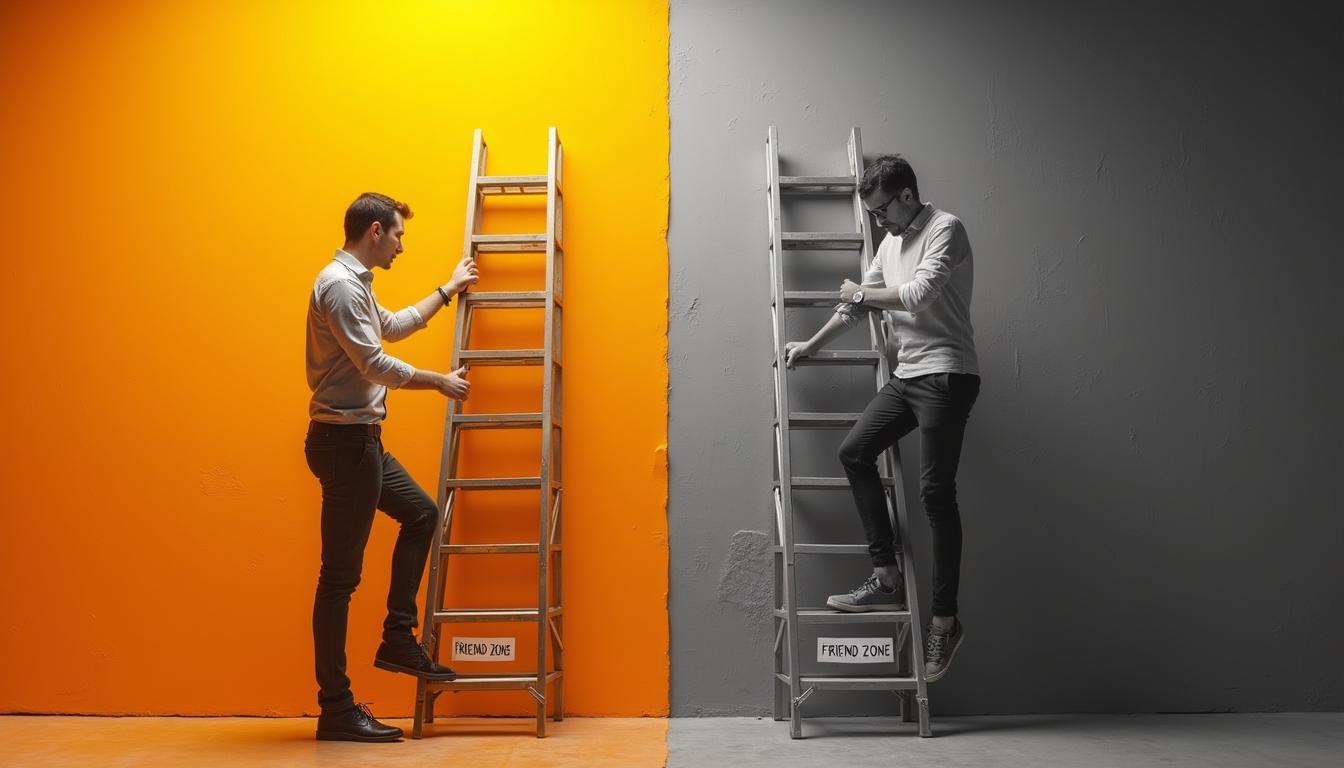
Understanding the Friend Zone requires an analysis of how men and women categorize potential partners. One of the most relevant psychological models explaining this phenomenon is The Ladder Theory, which suggests that men and women place people into different “ladders” based on attraction and romantic viability.
1. How the Ladder Theory Works
According to The Ladder Theory:
- Men operate on a single ladder: They rank women based on attractiveness and relationship potential, meaning they generally do not categorize women as “just friends” if they find them attractive.
- Women operate on two ladders: One ladder is for men they find romantically or sexually attractive, while the other ladder is for men they view as purely friends.
This distinction explains why many men struggle to transition from a platonic friendship into a romantic relationship—once placed on the “friend ladder,” it is difficult to move to the “romantic ladder.”
2. How This Relates to Friend Zone Manipulation
Women who use friend zone tactics often leverage this dual-ladder system to their advantage. They keep certain men in the friend category for emotional support while pursuing relationships with men on their romantic ladder. The subtle manipulation lies in allowing the friend-zoned man to believe he has a chance while never actually considering him a romantic option.
3. Can Men Escape the Friend Zone?
While difficult, moving from the friend ladder to the romantic ladder is possible but requires assertiveness, confidence, and strategic disengagement. By refusing to accept a passive role in the relationship and expressing clear intentions, men can avoid being indefinitely categorized as just a friend.

🔹 Psychological Impact of the Friend Zone on Men
Being trapped in the Friend Zone is not just a frustrating experience; it can have long-term psychological effects on self-esteem, confidence, and relationship patterns. Many men internalize the rejection and develop unhealthy emotional responses that affect future relationships.
1. Frustration and Emotional Suppression
Many men who find themselves in the friend zone experience a mix of frustration and emotional suppression. Since they believe expressing their romantic feelings could damage the friendship, they choose to hide their emotions, leading to:
- Resentment: Suppressing feelings can turn into bitterness over time.
- Self-Doubt: Men may question their attractiveness and worth.
- Insecurity in Future Relationships: Fear of rejection can lead to passive behavior in dating.
2. The “Nice Guy” Syndrome
Repeatedly ending up in the friend zone can lead to the development of the “Nice Guy” syndrome, where men believe that being overly accommodating, available, and emotionally supportive will eventually lead to romantic rewards. However, this mindset often backfires, as attraction is not based solely on kindness but on confidence and self-respect.
3. Long-Term Effects on Mental Health
In extreme cases, prolonged exposure to the friend zone dynamic can contribute to mental health struggles such as:
- Lowered self-esteem: Constant rejection without clarity can damage self-image.
- Social withdrawal: Some men may distance themselves from dating entirely.
- Distrust in women: Repeated manipulation can lead to generalizing negative assumptions about female behavior.
Recognizing these effects is crucial for men to avoid falling into negative mental loops and instead adopt a mindset of self-improvement and emotional intelligence.

🔹 The Biological and Evolutionary Reasons Behind the Friend Zone
The concept of the friend zone is often linked to social and psychological factors, but its roots can also be traced to evolutionary biology and human mating strategies. Men and women have evolved distinct approaches to relationships based on survival and reproductive success, which influences why one person may see a connection as romantic while the other views it as purely platonic.
1. Evolutionary Psychology and Relationship Categorization
From an evolutionary standpoint, men have historically been driven by a low-cost, high-reward mating strategy, meaning they often pursue multiple potential partners to increase reproductive success. Women, on the other hand, have a more selective approach, as pregnancy and child-rearing require higher biological investment.
As a result, women have evolved to place men into different social categories, distinguishing between:
- Potential Romantic Partners: Men who display desirable traits such as confidence, status, and dominance.
- Platonic Friends: Men who provide emotional support, companionship, and social value without triggering romantic attraction.
2. Why Women Keep Certain Men in the Friend Zone
Women often place men in the friend zone for non-romantic benefits, including:
- Emotional Security: Having a male friend to confide in and seek advice from.
- Protection and Social Status: Some women feel safer and more socially validated when surrounded by male friends.
- Backup Mate Strategy: Keeping certain men as an emotional safety net in case their primary relationships fail.
Understanding these evolutionary drives helps men recognize when they are being valued as emotional providers rather than romantic partners, allowing them to make more informed relationship choices.

🔹 Real-World Examples of Friend Zone Manipulation
Friend zone manipulation is not just a theory—it happens in real life, often in subtle ways. Below are real-world examples of how men have found themselves emotionally entangled in one-sided relationships while unknowingly being used for support, validation, and security.
1. The Emotional Dumping Ground
Case Study: A man constantly listens to a female friend’s relationship problems, offering emotional support and advice. She often tells him, “You’re the only one who understands me,” but she never considers him as a romantic partner. Instead, she continues dating men who treat her poorly, only to return to him when she needs comfort.
2. The Social Media Validation Trap
Case Study: A man frequently likes, comments, and supports a woman’s social media posts. She responds with friendly emojis and engaging messages but never reciprocates the effort in real life. She enjoys the attention but has no interest in a real relationship with him.
3. The “Maybe One Day” Illusion
Case Study: A woman tells a male friend, “If I were ever going to date anyone, it would be you,” or “Maybe we’ll end up together someday.” She gives just enough hope to keep him around but never commits to anything real.
These examples highlight the manipulative tactics often used to keep men emotionally attached without any true romantic progression.

🔹 Strategies to Avoid Getting Friend-Zoned in the First Place
The best way to handle the friend zone is to avoid it entirely. Here are practical strategies men can use to establish clear romantic intent from the beginning.
1. Set Clear Intentions Early
From the start, make your romantic interest clear. Avoid vague interactions that can be interpreted as purely friendly. Express attraction confidently and directly.
2. Avoid Over-Investing Without Reciprocity
Don’t invest too much emotional energy or time in a woman who isn’t reciprocating effort. If she consistently leans on you for support but keeps dating other men, step back and reassess your role.
3. Stop Being “Too Available”
Scarcity creates value. If you’re always available, answering every message instantly, and always prioritizing her needs over yours, you will be seen as a friend rather than a romantic prospect.
By implementing these strategies, men can maintain self-respect and set boundaries that lead to more fulfilling relationships.

🔹 The Role of Social Media in Reinforcing the Friend Zone
Modern dating is heavily influenced by social media, where many men unknowingly participate in friend zone reinforcement. Women can maintain an army of male followers who boost their confidence through likes, comments, and messages—without ever reciprocating in a meaningful way.
1. The “Like and Comment” Trap
Many men interact with a woman’s posts consistently, believing this effort will lead to deeper connection. However, this often results in a one-sided exchange where she enjoys the attention but never takes things further.
2. The Social Media “Orbiter” Effect
Some women keep certain men in their digital space for validation. These “orbiters” may think they have a chance, but in reality, they are simply background supporters with no real influence in her life.
3. The Illusion of Connection
Social media can create a false sense of closeness. A woman may send friendly DMs, react to stories, or give compliments, keeping a man hooked while maintaining distance in real life.
Understanding these dynamics helps men recognize when they are being subtly friend-zoned through digital interactions.

🔹 Frequently Asked Questions (FAQs)
What is the friend zone, and why does it happen?
The friend zone is a social dynamic where one person desires a romantic or sexual relationship while the other prefers to keep things purely platonic. It happens due to misaligned expectations, social conditioning, and psychological biases that influence how men and women categorize their relationships.
Can women use the friend zone as a form of manipulation?
Yes. Some women, knowingly or unknowingly, use the friend zone as a means of maintaining emotional support, validation, and security from a man without reciprocating romantic interest. This form of emotional manipulation can keep men invested in one-sided relationships.
How can I tell if I’m being manipulated in the friend zone?
Common signs include mixed signals, emotional dependency, strategic compliments that keep you invested, and situations where your efforts are only appreciated when convenient. If she frequently seeks your emotional support while actively dating others, you might be stuck in a manipulative friend zone.
What steps can I take to escape the friend zone?
To break free, you must set clear boundaries, assert your romantic intent early, and avoid over-investing without reciprocity. If she is unwilling to acknowledge your interest, it may be best to walk away and invest your energy in someone who values you romantically.
Is it possible to turn a friend zone situation into a romantic relationship?
While difficult, it is possible if you shift the dynamic, create scarcity, and build attraction. However, in most cases, if a woman has categorized you as a platonic friend, it is unlikely she will change her perception.
Are You Ready to Attract the Woman YOU DESERVE and DESIRE Right Now?
No, I’ll stay in my comfort zone!!
🔹 Conclusion
The friend zone is more than just a dating frustration—it is a psychological dynamic that can be used as a tool for manipulation or a reflection of misaligned expectations. Recognizing the signs of friend zone manipulation is the first step toward reclaiming control over your relationships.
By setting clear boundaries, asserting your intentions early, and refusing to be a passive participant in one-sided emotional investments, you can cultivate relationships based on mutual respect and attraction. Remember, a high-value man does not wait to be chosen—he chooses.
Now that you have this knowledge, it’s time to take action. Start recognizing manipulative patterns, set stronger standards for yourself, and invest in relationships where your value is acknowledged and reciprocated.


